The Smarter Way to Understand a Home’s True Position in the Market

Why AVM Optimizer, HomeValueOptimizer.com, and HomeAgeUpdateGuide.com Work Better Together

Residential real estate decisions are often made using incomplete information.

Most consumers rely on a single automated value.
Most professionals compare multiple portals.
Almost no one reconciles those values systematically — or considers the hidden condition implications of a home’s age.

That’s where this three-tool ecosystem changes the equation.


HomeAgeUpdateGuide.com Launches to Bring Clarity to Home Updates

HomeAgeUpdateGuide.com Launches to Bring Clarity to Home Updates, Online Values, and Real Estate Decisions

New free tool helps consumers and professionals better understand how home updates, condition, and timing affect value

Farmington Hills, MI — February 6, 2026
HomeAgeUpdateGuide.com has launched as a free educational resource designed to help homeowners, buyers, real estate professionals, and lenders better understand how the age and timing of home updates influence market value and real estate decisions.

While online home value estimates have become widely used, they often lack reliable insight into when key components of a home were last updated, such as roofs, mechanical systems, kitchens, bathrooms, and other major elements. This gap can lead to confusion, valuation differences, and unexpected outcomes during buying, selling, refinancing, or appraisal processes.

HomeAgeUpdateGuide.com addresses this issue by explaining, in plain language, the typical life expectancy and market relevance of common home updates, helping users understand what is generally considered current, aging, or overdue in today’s housing market.

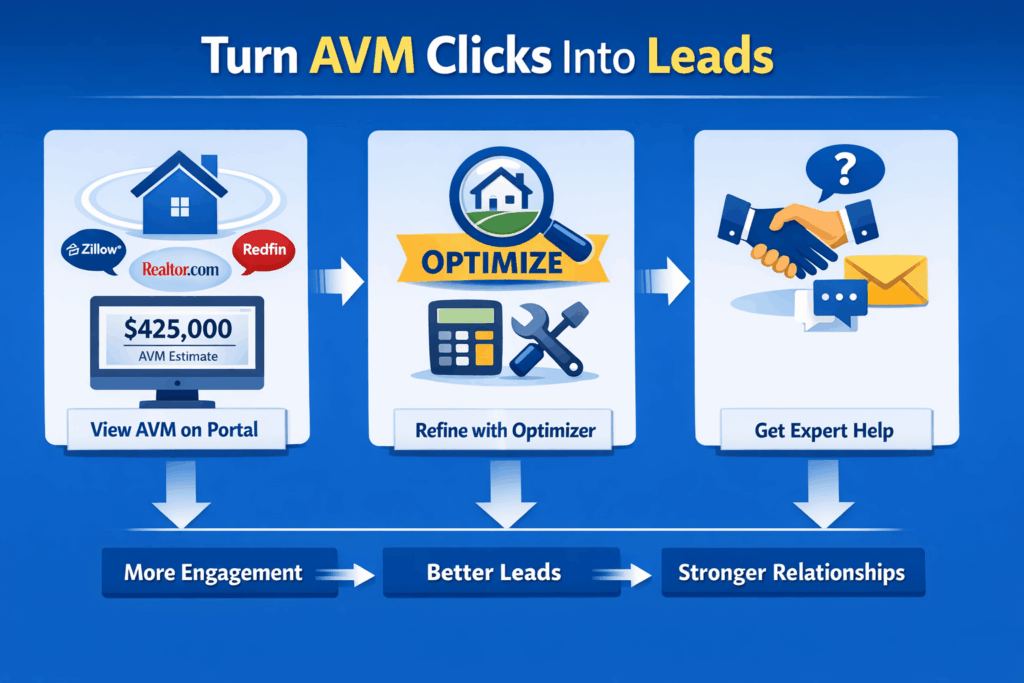
Turn AVM Pages Into Leads: A Simple Link Strategy Every Real Estate Pro Should Be Using

Every real estate professional links to the big portals.

Clicks into Leads

Zillow.
Realtor.com.
Redfin.
Homes.com.

Those links are everywhere — emails, websites, social posts, listing presentations, CMA PDFs. And they all share one thing in common:

They end the conversation.

Consumers click, see an AVM number, form an opinion, and stop engaging.
No call.
No email.
No questions.
No relationship.

But there’s a simple way to turn those same links into engagement, leads, and trust-building conversations — without fighting the portals or replacing them.


Is Your Home Value Estimate Missing the “Human” Factor?

Is Your Home Value Estimate Missing the “Human” Factor?

Most homeowners have a love-hate relationship with their “Zestimate” or Redfin estimate. While these Automated Valuation Models (AVMs) are fast, they often miss the one thing that makes your home unique: The actual condition of it.

The biggest question consumers ask about tools like the AVM Optimizer is whether it can truly provide a more accurate value than these tech giants. The short answer? Yes, because it lets you speak for your home.

The Accuracy Gap: Why Generic AVMs Often Fail

Standard AVMs are “blind”—they rely on public tax records and neighborhood sales. They don’t know if you just spent $30k on a chef’s kitchen or if your roof is 20 years old.

  • The “Blind Spot”: Traditional models often assume a home is in “average” condition.
  • The Margin of Error: Some experts report that typical AVMs can have a margin of error as high as 20% because they miss high-end upgrades or needed repairs.

How the AVM Optimizer Bridges the Gap

Unlike static tools, the AVM Optimizer uses a specialized six-question process to refine your value. This allows you to factor in:

  • Condition & Upgrades: You can manually adjust for renovations, kitchen remodels, or energy-efficient upgrades.
  • Scenario Planning: You can “experiment” with potential renovations—like a finished basement—to see the impact on your value before you spend a dime.
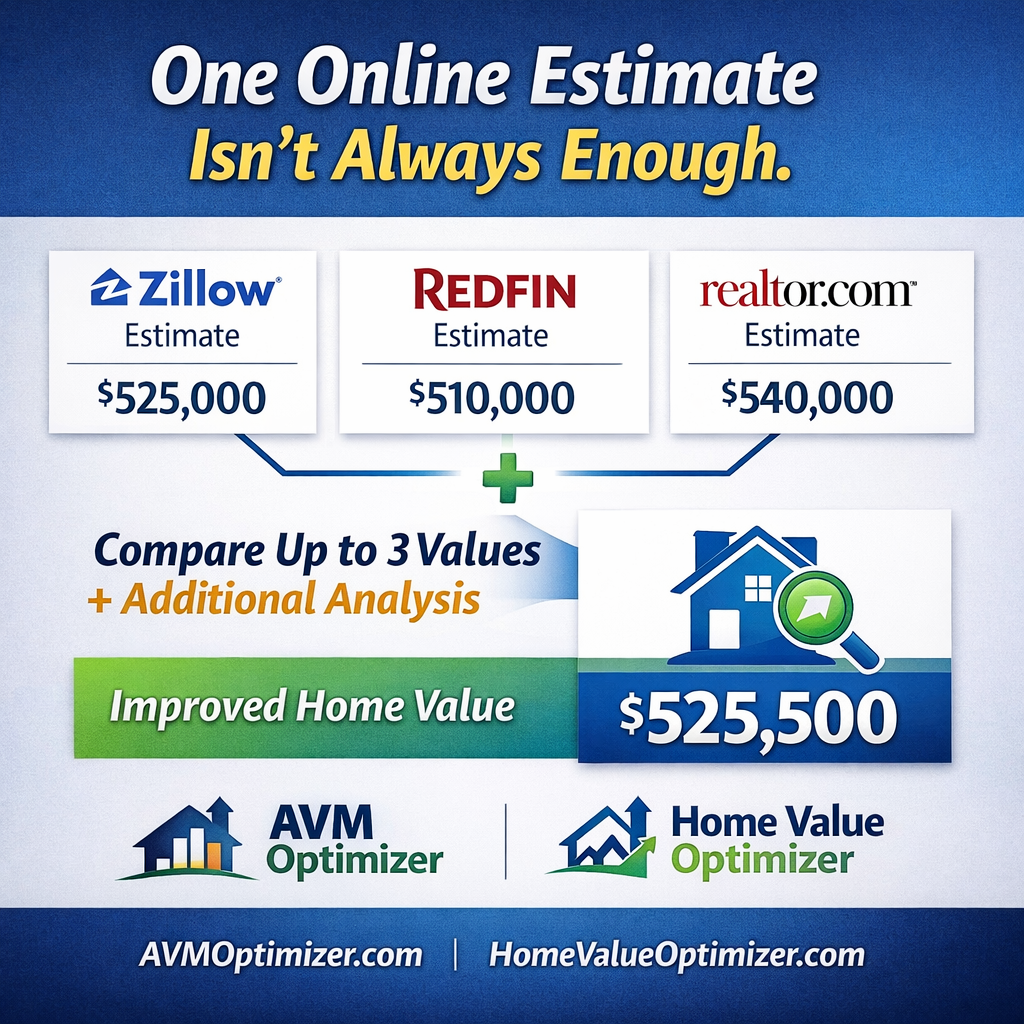
  • Multi-Platform Comparison: It puts estimates from Zillow, Redfin, and Realtor.com side-by-side, then applies your specific property context to all of them at once.

The Bottom Line for Homeowners

The company claims this refined approach can improve the accuracy of your home value estimate by up to 30%. While it isn’t a replacement for a formal appraisal, it provides a far more realistic starting point for sellers, buyers, and those looking to refinance.

Stop letting a computer’s “best guess” define your equity. Use a tool that factors in the work you’ve actually put into your home.

AVM Optimizer: The Scientific Advantage

The Housing Market Has Been Waiting For

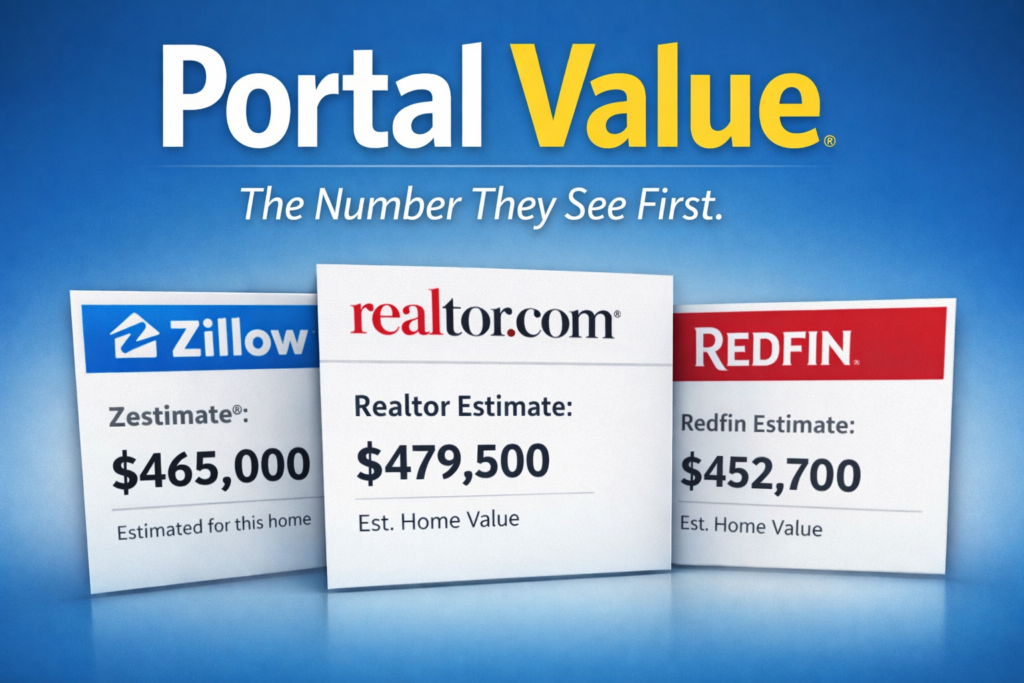
For decades, home values were determined behind closed doors — in MLS systems, appraiser workfiles, and proprietary lender models. Today, online Automated Valuation Models (AVMs) like Zillow’s Zestimate and Redfin Estimate have brought transparency, but not accuracy.

They provide national-scale access to estimates, yet they cannot see what most impacts value:
Condition and improvement-level details only homeowners know.

This is where AVM Optimizer emerges as a uniquely logical, science-driven solution.


1. Solving the AVM Blind Spot

AVMs excel at analyzing:

  • Recent comparable sales
  • Neighborhood trends
  • Market appreciation
  • Size, age, and public-record features

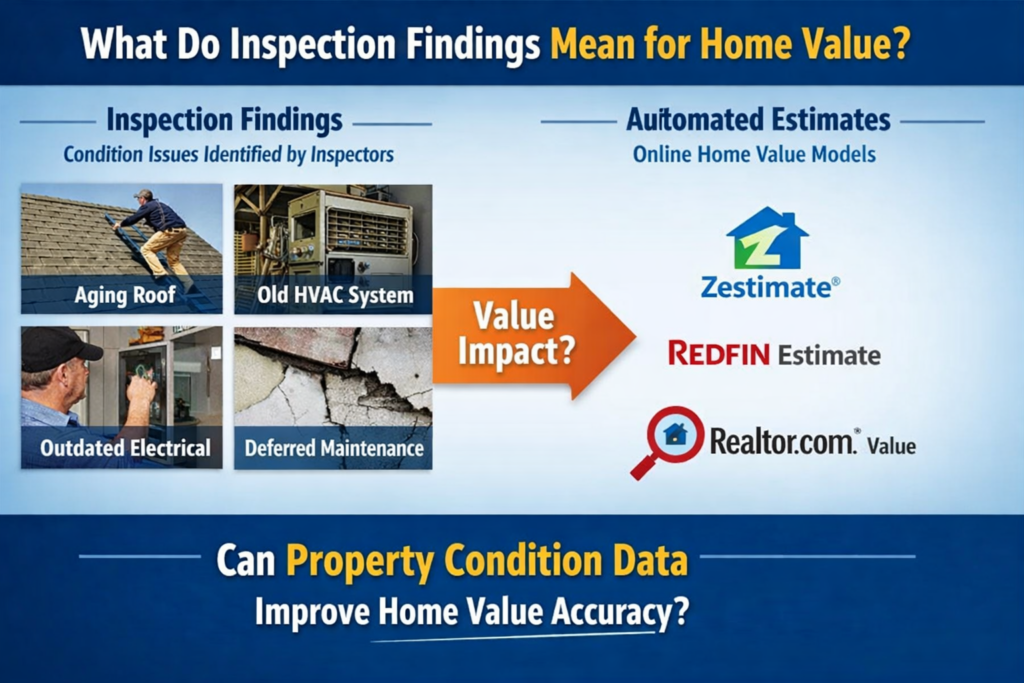
But public data never includes condition — a variable responsible for swings of 10–30% or more in residential value.

AVM Optimizer fills that gap by letting consumers:

  • Identify improvements (new kitchen, roof, HVAC, finished basement)
  • Adjust for needed repairs
  • Correct outdated or missing data

In economic terms:

How AVM Optimizer Can Impact the Federal “AVM Final Rule” (Quality Control Standards)

How AVM Optimizer Can Impact the Federal “AVM Final Rule”

On October 1, 2025, a federal interagency Final Rule took effect requiring quality control standards for Automated Valuation Models (AVMs) when they’re used by mortgage originators and secondary market issuers to value a consumer’s principal dwelling. Consumer Financial Protection Bureau+2Federal Register+2

This rule doesn’t “ban” AVMs—it effectively says: If you’re going to use them in covered housing finance decisions, you need controls that make the results credible, defensible, and fair.

That’s exactly where AVM Optimizer can matter—because it focuses on one of the biggest real-world reasons AVMs miss: property condition and upgrades that aren’t in public data.


Your Home’s Value Is Missing a Voice

Here’s the quiet flaw in online home values—and how to fix it.

Most online home values come from Automated Valuation Models (AVMs). They’re fast, consistent, and widely used.
They’re also incomplete.

AVMs rely on public data: sales, square footage, location, and tax records. What they can’t see are the things that often matter most:

  • Renovated kitchens and baths
  • Finished basements
  • Updated roofs, HVAC, windows, or insulation
  • Ongoing care and maintenance

When those details are missing, the value is usually conservative.

That’s where AVM Optimizer and Home Value Optimizer come in.

These tools don’t replace the AVM — they build on it. You start with an existing automated value, then answer a small set of questions focused only on things AVMs can’t know. No double counting. No re-appraising the whole house.

The result is a clearer, more realistic value range that reflects how the home actually lives — not just how it appears in public records.

Why this matters now:

  • Tight inventory and cautious buyers
  • Lenders leaning heavily on automation
  • Deals hinging on small value gaps

Being undervalued in this environment can cost real money.

Whether you’re preparing to sell, refinance, negotiate, or simply want clarity, optimizers let the homeowner add context — privately, on their terms.

AVMs estimate houses.
Optimizers estimate homes — as lived in, improved, and understood by the people who know them best.

Before accepting any automated value as final, ask one question:
What would the number be if the house could speak for itself?

That’s the problem AVM Optimizer and Home Value Optimizer were built to solve.

Housing Market Story

How AVM Optimizer and Home Value Optimizer Will Help Shape the Current Housing Market Story

Housing Market

One of the most important residential real estate stories of the past month has been the increase in existing-home sales driven by temporarily lower mortgage rates, even as housing supply remains stalled. Buyers have re-entered the market as rates eased, yet many homeowners continue to delay listing their properties during the winter months, constrained by uncertainty, seasonality, and the fear of mispricing.

According to the National Association of Realtors, existing-home sales rose modestly while inventory stayed tight—highlighting a market where demand is responding faster than supply. In this environment, valuation accuracy and confidence will play a critical role in determining whether momentum continues or stalls again.

This is where AVM Optimizer and Home Value Optimizer will help in several key areas.


How to Get the Most Accurate Home Value

Using AVM Optimizer and Home Value Optimizer

Improve home value estimate

Automated Valuation Models (AVMs) such as those used by major real estate websites are powerful tools—but they are not complete. They rely primarily on public records, recent sales, and market trends. What they cannot fully see or understand is the true condition of your home and the improvements that make it unique.

That gap is exactly where
AVM Optimizer and
Home Value Optimizer
come in.

Used correctly, these tools can significantly improve the accuracy of an AVM—often increasing value—by incorporating critical information that standard AVMs simply don’t have access to.


Start With a Standard AVM First

Don’t Let Consumer AVMs Kill Your Deal — Run Every Estimate Through an Optimizer First

Consumer-facing AVMs like Zillow, Redfin, Homes.com, and Realtor.com have become the default starting point for nearly every buyer and seller.
But they are also quietly becoming the #1 deal-killer in residential real estate.

Why?
Because buyers anchor to one number, sellers anchor to another, and agents end up negotiating between two inaccurate values—neither of which reflects the home’s true condition or improvements.