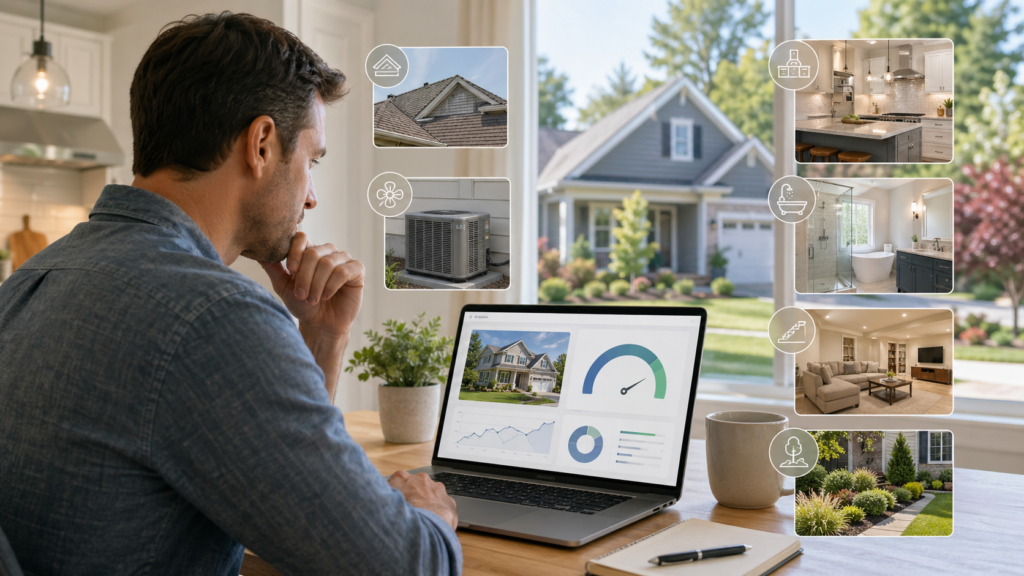
Understanding a home involves more than looking at a single online estimate. Its age, condition, major improvements, and online values all contribute to the complete picture.
That is why three free tools are now connected as The Home Optimizer System—a coordinated system that helps homeowners and real estate professionals better understand a property’s age, condition, and online value.
Why We Created Home Value Optimizer After AVM Optimizer
When we introduced AVM Optimizer, our goal was straightforward: help homeowners better understand whether an online home value reflected improvements or property characteristics that automated valuation models (AVMs) may have overlooked. It provided homeowners with a practical way to evaluate a single online estimate and determine whether upgrades, renovations, or property features could justify a higher or lower value.
As homeowners, real estate professionals, and industry contacts began using the tool, we recognized an important opportunity. Most people no longer rely on just one online estimate. They compare values from Zillow, Realtor.com, Redfin, Homes.com, and other real estate portals before making decisions. Instead of asking, “Is this one value accurate?” they were asking, “Which online value should I trust?”
Home Value Optimizer Introduces New Features While AVM Optimizer Remains Stable
We’re excited to announce a new generation of Home Value Optimizer (HVO).
HVO is now our active development platform, where new ideas, features, reporting enhancements, and valuation insights will be tested and refined. As technology, market knowledge, and user feedback evolve, HVO will continue to grow and improve.
At the same time, AVM Optimizer (AVMO) remains available for users who prefer the original methodology and familiar experience. AVMO will continue to provide the stable approach that many users have come to trust.
While the platforms may follow different development paths, both share the same core philosophy:
Help users better evaluate online home value estimates by considering property-specific factors that automated valuation models may not fully recognize.
Whether you prefer the consistency of AVMO or the ongoing innovation of HVO, both tools are designed to provide greater insight into online home values and support more informed real estate decisions.
Same valuation philosophy. Different paths forward.
If you’ve ever looked up your home’s value online and thought, “That can’t be right,” you’re not alone.
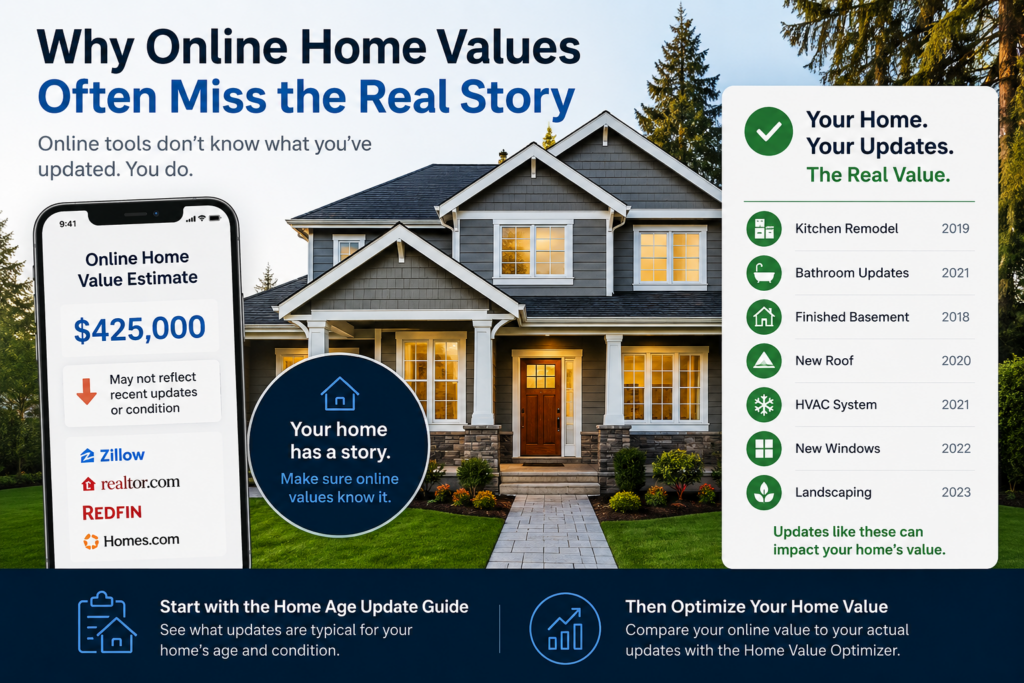
Millions of homeowners rely on online home value estimates from Zillow, Realtor.com, Redfin, Homes.com, and other portals. These tools can be useful starting points, but they often have one major limitation:
They may not know what has been updated inside your home.
The Hidden Problem with Online Home Values
Most automated valuation models (AVMs) rely heavily on public records, recent sales, and market trends. While that information is important, it may not accurately reflect improvements made over time.
For example:
A remodeled kitchen
Updated bathrooms
A finished basement
A new roof
Modern HVAC systems
Extensive landscaping improvements
These updates can significantly influence how buyers view a property, yet they may not be fully recognized by online valuation models.
Older Homes Face the Biggest Challenge
The issue becomes even more noticeable in homes that are 20, 30, 40, or even 50 years old.
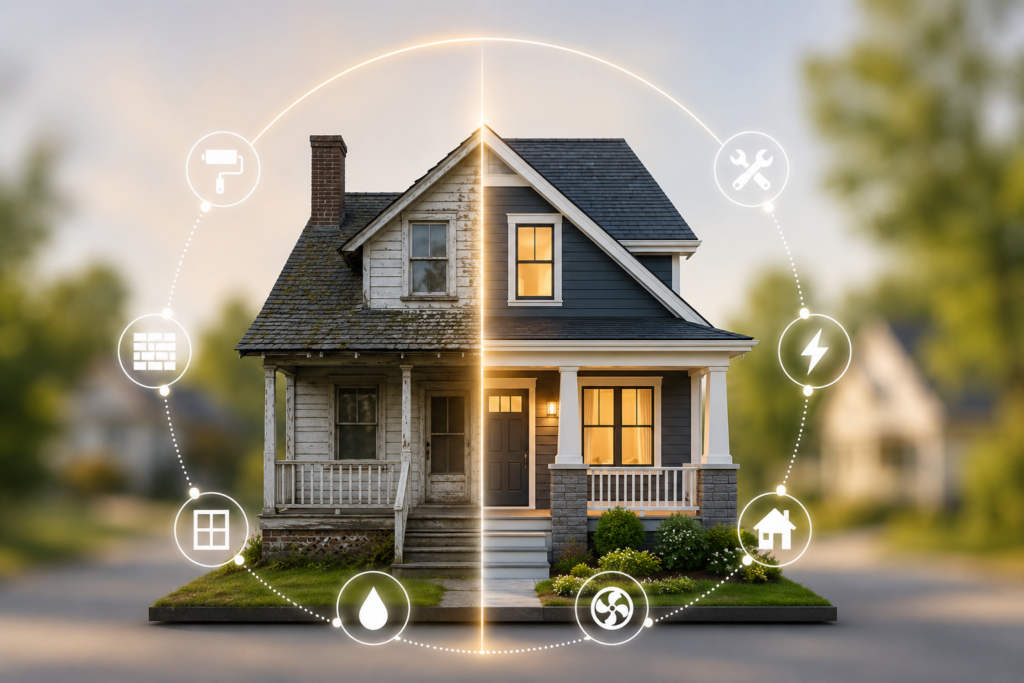
Two homes may have been built in the same year and have similar square footage, but one may have undergone extensive renovations while the other remains largely original.
Online value estimates often struggle to recognize these differences.
That’s why homeowners are frequently surprised when an appraisal, buyer, or real estate professional arrives at a value that differs from an online estimate.
Start with Your Home’s Age
Many homeowners don’t realize how many components of a home have expected life cycles.
Roofs, HVAC systems, water heaters, windows, flooring, appliances, and kitchens all age differently.
The Home Age Update Guide helps homeowners understand what improvements may have been updated, what may be due soon, and what is often still within its expected life cycle based on the age of the property.
This creates a useful starting point for understanding how your home compares to what an online valuation model may assume.
The Next Step: Optimize Your Portal Value
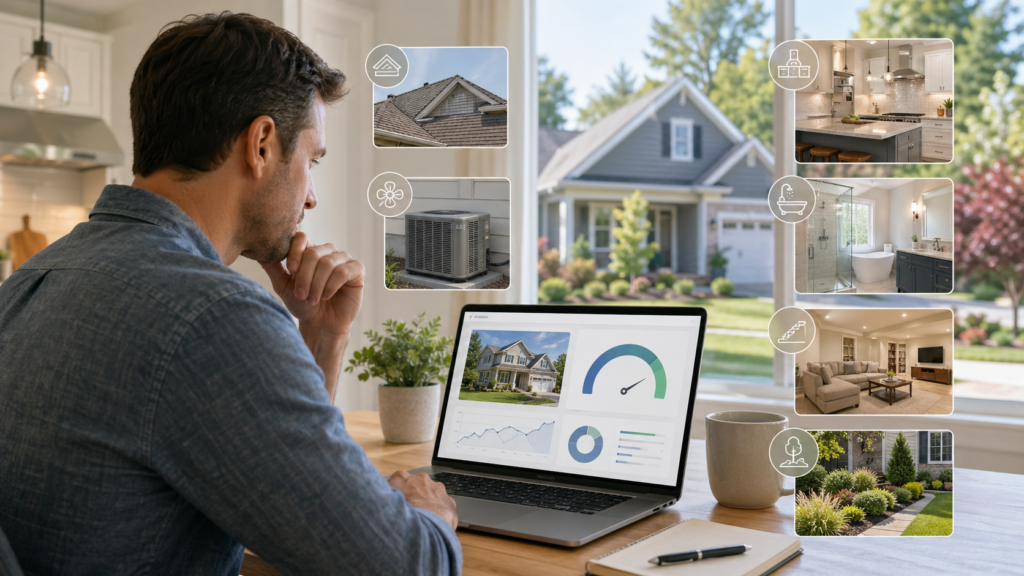
Once you understand your home’s updates and improvements, the next step is to evaluate whether those features are being reflected in your online home value estimate.
The Home Value Optimizer and AVM Optimizer allow homeowners to compare their online value estimates against actual property updates that may not be fully recognized by automated systems.
The result is a more informed perspective on how upgrades, renovations, and condition may influence a property’s market perception.
A Better Starting Point
No online estimate is perfect.
No algorithm can replace a professional appraisal when one is required.
However, understanding your home’s condition, improvements, and age-related updates can provide valuable context that many online estimates simply don’t capture.
Before accepting any online home value at face value, take a closer look at what your home has become since it was built.
The difference may surprise you.
Start with your home’s age. Then compare your online value estimate to your home’s actual condition and updates.
A better understanding of your home often starts with better information.
One of the biggest surprises from the Optimizer system has been the growing response to the Home Age Update Guide at HomeAgeUpdateGuide.com.
What started as a simple companion tool has quickly become one of the most practical resources for consumers and real estate professionals — especially in seasoned older home markets where condition, updates, and maintenance history matter more than ever.
Many homeowners know their home “feels” worth more than what online estimates suggest, but they often struggle to explain why. The problem is that many automated valuation systems and online estimates do not fully recognize the real-world impact of updates, renovations, maintenance, and replacement cycles that naturally occur over time.
That is where the Home Age Update Guide becomes extremely useful.
The guide helps homeowners and buyers understand what components of a home are commonly updated, replaced, or nearing replacement based on the age of the property. Items such as roofs, HVAC systems, water heaters, plumbing, electrical systems, kitchens, bathrooms, windows, flooring, and more all influence how buyers perceive value and condition.
For older homes especially, this information can be eye-opening.
Consumers are often surprised to see: • what improvements may already contribute to value, • what buyers may expect to have been updated, • and what deferred maintenance may impact marketability or pricing.
Realtors are also finding the tool useful because it helps create more informed conversations with clients before listing, buying, or negotiating. In many cases, it helps explain why two homes with similar size and location may sell for dramatically different prices.
The Home Age Update Guide works hand-in-hand with the Optimizer system, including: • AVMOptimizer.com • HomeValueOptimizer.com • and HomeAgeUpdateGuide.com
Together, these tools help consumers better understand “portal value” — the value impression created by online real estate estimates — and why those numbers can sometimes miss important details found in seasoned homes.
In today’s market, understanding condition and update history is becoming just as important as square footage and location.
That is why the Home Age Update Guide continues to gain attention from homeowners, buyers, Realtors, and real estate professionals looking for better ways to understand real-world home value.
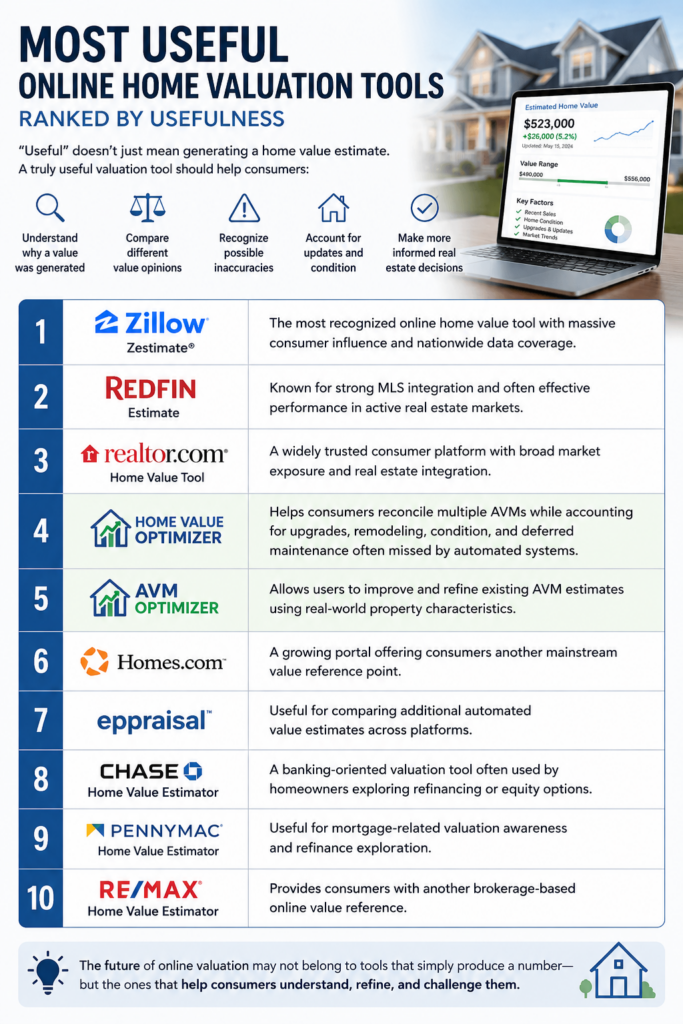
“Useful” does not simply mean generating a home value estimate.
A truly useful valuation tool should help consumers:
understand why a value was generated,
compare different value opinions,
recognize possible inaccuracies,
account for updates and condition,
and make more informed real estate decisions.
With that definition in mind, here is a practical ranking of some of today’s most useful online home valuation tools:
Zillow Zestimate The most recognized online home value tool with massive consumer influence and nationwide data coverage.
Redfin Estimate Known for strong MLS integration and often effective performance in active real estate markets.
Realtor.com Home Value Tool A widely trusted consumer platform with broad market exposure and real estate integration.
Home Value Optimizer Useful because it helps consumers reconcile multiple AVMs while accounting for upgrades, remodeling, condition, and deferred maintenance often missed by automated systems.
AVM Optimizer Useful because it allows users to improve and refine existing AVM estimates using real-world property characteristics.
Homes.com Home Value A growing portal offering consumers another mainstream value reference point.
Eppraisal Useful for comparing additional automated value estimates across platforms.
Chase Home Value Estimator A banking-oriented valuation tool often used by homeowners exploring refinancing or equity options.
As online valuation tools continue evolving, the most useful systems may not be the ones that simply produce a number — but the ones that help consumers better understand the number.
Many homeowners check Zillow and immediately think:
“That Zestimate is too low.”
Sometimes the number may be close. Other times, it may not fully reflect what the homeowner knows about the property. This is especially true when the home has been updated, renovated, carefully maintained, or improved beyond what public records can easily show.
That is one of the biggest challenges with online home estimates.
A Zestimate or other automated home value can be a useful starting point, but it may not always understand the full story of a property. Public records may show square footage, bedroom count, bathroom count, lot size, year built, and sale history. Those facts are important, but they do not always explain condition, updates, quality, or buyer appeal.
Two homes can look very similar in public records but be very different in the real market.
One home may have an original kitchen, older bathrooms, an aging roof, unfinished basement, and outdated mechanical systems.
Another home may have a remodeled kitchen, updated bathrooms, finished basement, newer roof, newer furnace and air conditioning, and strong landscaping.
To a buyer, those homes are not the same.
To an automated estimate, they may appear too similar.
Online home estimates have become part of the real estate process. Before many homeowners call a real estate agent, lender, or appraiser, they often check a value online first.
Sometimes that number seems reasonable.
Other times, it feels too low.
A homeowner may look at an online estimate and think:
“My kitchen was remodeled.” “My roof is newer.” “My basement is finished.” “My home is in better condition than nearby sales.” “Why is the estimate not showing that?”
That is a fair question.
Online home estimates and Automated Valuation Models, often called AVMs, can be useful starting points. But they do not always see the same property details that buyers, sellers, agents, appraisers, and lenders may consider in the real market.
Why an Online Home Estimate Can Be Too Low
An online estimate is usually based on available data. That may include public records, recent sales, prior listings, market trends, tax data, square footage, bedroom count, bathroom count, lot size, and neighborhood patterns.
That information is helpful, but it may not tell the full story.
A home’s value can be affected by details that are not always obvious in public records, including:
a remodeled kitchen
updated bathrooms
finished basement space
newer roof
newer furnace, central air, or hot water system
strong landscaping and curb appeal
better-than-average condition
superior maintenance
recent renovations not reflected in public data
If the AVM does not know those details, the estimate may be lower than what a more complete review would suggest.
The Problem Is Bigger in Older Neighborhoods
This issue is especially common in older or established neighborhoods.
Two homes may have been built in the same decade, have similar square footage, and sit on similar lots. On paper, they may look almost the same.
But in reality, they can be very different.
One home may have a 25-year-old kitchen, older bathrooms, a worn roof, and an unfinished basement. Another may have a remodeled kitchen, updated baths, a finished basement, newer mechanical systems, and excellent landscaping.
Public records may see two similar houses.
The market may see two very different homes.
That is why some homeowners are surprised when an online estimate does not seem to reflect the actual condition or improvements of their property.
Recent Improvements May Not Be Fully Reflected
Another reason an estimate may be too low is timing.
If a homeowner recently completed major improvements, the data used by an AVM may not have caught up yet. A remodeled kitchen, updated bathroom, new roof, or finished basement may matter to buyers, but it may not immediately appear in public records or automated valuation data.
Even when listing photos or prior sale information are available, the system may not always weigh those improvements the same way a local real estate professional or appraiser would.
This does not mean the AVM is useless.
It means the AVM may be incomplete.
Some Features Are Hard for an AVM to Measure
Certain property features are difficult to measure automatically.
For example, “condition” is not always a simple public-record field. A home may be listed as having three bedrooms, two baths, and 2,000 square feet, but that does not explain whether the home is dated, average, remodeled, high-end, or in need of repair.
The same is true for:
quality of kitchen updates
bathroom condition
basement finish quality
roof condition
mechanical system age
curb appeal
overall pride of ownership
These details can influence how buyers react to a home. They can also affect whether an online estimate seems too high, too low, or about right.
Online home value estimates have become one of the first places homeowners go when they want to know what their house may be worth.
A homeowner may check Zillow, Realtor.com, Redfin, Homes.com, Trulia, or another online real estate site before calling a Realtor, lender, appraiser, or tax professional. These online estimates are convenient, fast, and widely used.
But they are not always complete.
Many online home value estimates are produced by Automated Valuation Models, often called AVMs. These systems may use public records, prior sales, market trends, square footage, lot size, location, and other available data to estimate value.
That can be useful. But it can also leave out some of the most important details about a specific home.
Why Online Home Value Estimates May Be Inaccurate
An online estimate may not fully know what has happened inside or outside the home.
For example, an AVM may not know whether:
The kitchen has been updated
The bathrooms have been remodeled
The basement has been finished
The roof is new or worn
The furnace, air conditioning, or hot water system has been replaced
The landscaping is above average or below average
The home has deferred maintenance
The home is in better or worse condition than nearby sales
These details can matter.
Two homes in the same neighborhood with similar square footage may have very different values if one has a remodeled kitchen, finished basement, newer roof, and updated mechanical systems while the other needs major improvements.
Online estimates often struggle with those differences because many of those details are not always available in public records.