Many homeowners check Zillow and immediately think:
“That Zestimate is too low.”
Sometimes the number may be close. Other times, it may not fully reflect what the homeowner knows about the property. This is especially true when the home has been updated, renovated, carefully maintained, or improved beyond what public records can easily show.
That is one of the biggest challenges with online home estimates.
A Zestimate or other automated home value can be a useful starting point, but it may not always understand the full story of a property. Public records may show square footage, bedroom count, bathroom count, lot size, year built, and sale history. Those facts are important, but they do not always explain condition, updates, quality, or buyer appeal.
Two homes can look very similar in public records but be very different in the real market.
One home may have an original kitchen, older bathrooms, an aging roof, unfinished basement, and outdated mechanical systems.
Another home may have a remodeled kitchen, updated bathrooms, finished basement, newer roof, newer furnace and air conditioning, and strong landscaping.
To a buyer, those homes are not the same.
To an automated estimate, they may appear too similar.
Why Zillow May Miss Important Home Improvements
Automated valuation models rely heavily on available data. The problem is that many important improvements are not always fully reflected in the data.
A homeowner may know that the kitchen was remodeled, the bathrooms were updated, the basement was finished, or the roof was recently replaced. But that information may not be fully visible to an online estimate.
This can be especially important in older neighborhoods. A home built in 1960 may still be mostly original, or it may have been modernized over many years. The public record may show the same year built, but the market sees a major difference.
That is why a Zestimate can feel too low.
The issue is not always that the estimate is “bad.” The issue may be that it does not have enough information about the home’s actual condition and updates.
Common Reasons a Zestimate May Be Too Low
A Zestimate or other online estimate may be too low when it does not fully account for:
Remodeled kitchens
Updated bathrooms
Finished basement space
Newer roof
Newer furnace, air conditioning, or hot water system
Improved landscaping
Superior condition
Extensive maintenance
Interior upgrades
Effective age differences
These items can matter to buyers. They can also matter to real estate agents, lenders, and homeowners trying to understand equity.
If an online estimate does not fully see those items, the value may not reflect what the property could actually command in the market.
Why This Matters Before You Sell, Refinance, or Borrow
A low online estimate can influence how a homeowner thinks about the property.
It may affect whether they believe they have enough equity. It may influence a decision about selling, refinancing, applying for a home equity loan, removing PMI, or challenging a property tax assessment.
It may also affect buyer expectations. Many buyers look at online estimates before they ever tour a home. If the online number is too low, it can create confusion before the home is even discussed.
That is why homeowners should not automatically accept the first online number as the final answer.
They should ask a better question:
What important property details might the estimate be missing?
How AVM Optimizer Helps
AVM Optimizer was created for homeowners who look at an online estimate and think:
“This does not reflect my home.”
Instead of replacing Zillow, Redfin, Realtor.com, Homes.com, or other online valuation tools, AVM Optimizer works with those estimates as a starting point.
The homeowner enters the current online estimate, then reviews important condition and update categories that may not be fully reflected in the automated value.
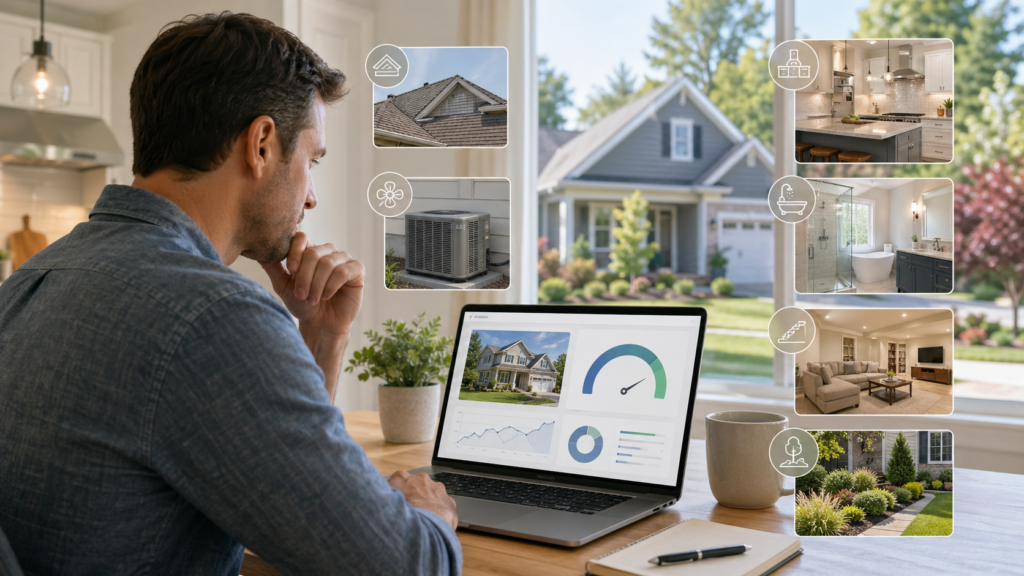
AVM Optimizer considers items such as:
Kitchen condition
Bathroom condition
Basement finish
Roof condition
Furnace, hot water, and air conditioning
Landscaping
The result is an adjusted estimate that helps the homeowner think more clearly about whether the original online value may be too low, too high, or reasonably supported.
AVM Optimizer Can Raise or Lower the Estimate
One important point is that AVM Optimizer is not designed only to increase values.
Sometimes an online estimate may be too high. If a home needs a roof, has an outdated kitchen, older bathrooms, poor landscaping, or mechanical systems near the end of their useful life, the online estimate may not fully reflect those problems either.
AVM Optimizer helps review the number in either direction.
That makes it more useful than simply assuming Zillow is wrong because the number feels low.
The goal is a better starting point — not a guaranteed value.
A Better Way to Respond to a Low Zestimate
If your Zestimate seems too low, do not ignore it. But do not automatically accept it either.
Ask whether the number reflects the real condition of your home.
Does it know about your remodeled kitchen?
Does it reflect your updated bathrooms?
Does it include your finished basement?
Does it understand your newer roof or mechanical systems?
Does it recognize that your home is in better condition than competing sales?
Those are the kinds of details that may affect value.
AVM Optimizer gives homeowners a simple way to review the online estimate and add the condition and update information that may be missing.
The Zestimate may be the first number.
It does not have to be the only number.
If your Zestimate seems too low, run it through AVM Optimizer before you accept the number.
Try it at AVMOptimizer.com