Online home value estimates have become one of the first places homeowners go when they want to know what their house may be worth.
A homeowner may check Zillow, Realtor.com, Redfin, Homes.com, Trulia, or another online real estate site before calling a Realtor, lender, appraiser, or tax professional. These online estimates are convenient, fast, and widely used.
But they are not always complete.
Many online home value estimates are produced by Automated Valuation Models, often called AVMs. These systems may use public records, prior sales, market trends, square footage, lot size, location, and other available data to estimate value.
That can be useful. But it can also leave out some of the most important details about a specific home.
Why Online Home Value Estimates May Be Inaccurate
An online estimate may not fully know what has happened inside or outside the home.
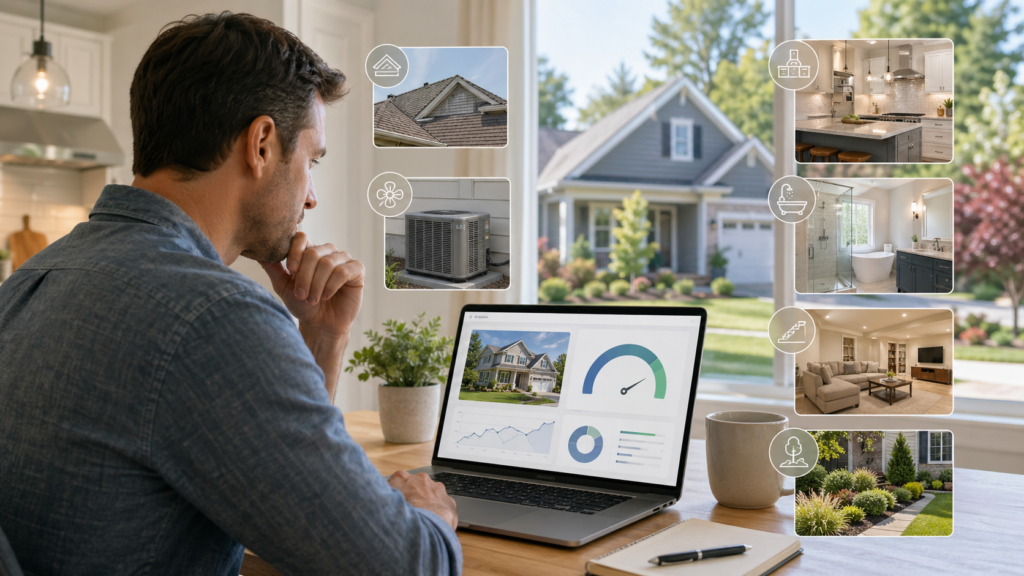
For example, an AVM may not know whether:
- The kitchen has been updated
- The bathrooms have been remodeled
- The basement has been finished
- The roof is new or worn
- The furnace, air conditioning, or hot water system has been replaced
- The landscaping is above average or below average
- The home has deferred maintenance
- The home is in better or worse condition than nearby sales
These details can matter.
Two homes in the same neighborhood with similar square footage may have very different values if one has a remodeled kitchen, finished basement, newer roof, and updated mechanical systems while the other needs major improvements.
Online estimates often struggle with those differences because many of those details are not always available in public records.
The Problem With “Portal Value”
Many homeowners now form an opinion of value from what they see on real estate portals. That first online number becomes what could be called a real estate portal value — the value impression created by online estimates before a professional is ever involved.
That number may be too high, too low, or reasonably close.
The problem is that many consumers do not know what the estimate includes, what it misses, or how much condition and updates may affect the result.
That is where AVM Optimizer can help.
What AVM Optimizer Does
AVM Optimizer is designed to help homeowners start with an online estimate and then consider important property details that may not be fully reflected in the original AVM.
Instead of replacing online valuation tools, AVM Optimizer works as a practical second step.
A homeowner can begin with an estimate from a popular real estate website, then use AVM Optimizer to adjust for property-specific factors such as:
- Basement finish
- Kitchen condition
- Bathroom condition
- Roof condition
- Furnace, hot water, and air conditioning
- Landscaping and exterior appeal
The goal is not to claim that every online estimate is wrong. The goal is to help homeowners ask a better question:
Does this online value reflect the actual condition and updates of my home?
AVM Optimizer Can Increase or Decrease the Estimate
One important point is that AVM Optimizer is not only designed to raise a value.
Sometimes an online estimate may be too low because it does not recognize updates or improvements.
Other times, an online estimate may be too high because it does not recognize needed repairs, worn components, or below-average condition.
That matters because homeowners need a realistic starting point, not just a higher number.
A more complete estimate can help homeowners think more clearly about selling, refinancing, home equity, property taxes, insurance, or general financial planning.
Why This Matters Before You Talk to a Professional
Many consumers look at online values before they ever speak with a Realtor, appraiser, lender, or tax consultant.
That can create confusion if the online estimate does not match the professional opinion later.
Using AVM Optimizer first can help homeowners better understand why an online value may need adjustment. It can also help them have a more informed conversation with a real estate professional.
For example, instead of simply saying:
“Zillow says my house is worth this much,”
a homeowner can ask:
“Does this estimate reflect my finished basement, remodeled kitchen, newer roof, and updated mechanical systems?”
That is a better starting point.
A Useful Tool for Homeowners Comparing Online Estimates
Online estimates are not all the same. Zillow, Redfin, Realtor.com, Homes.com, Trulia, and other platforms may produce different values for the same property.
That can be confusing.
AVM Optimizer gives homeowners a simple way to think beyond the first number and consider whether important property details may change the estimate.
It helps turn an online value from a fixed number into a more informed starting point.
When AVM Optimizer May Be Most Useful
AVM Optimizer may be especially helpful when:
- The home is older
- The neighborhood has a wide range of condition levels
- The home has been significantly updated
- The home needs repairs
- Public records do not show improvements
- Nearby sales are not very similar
- Online estimates from different websites vary widely
- The owner believes the online estimate does not reflect the property
In these situations, condition and updates can make a major difference.
Online Estimates Are Useful — But They Need Context
Online home value estimates are not going away. They are now part of the real estate process.
The better approach is not to ignore them. The better approach is to understand their limits.
AVM Optimizer gives homeowners a simple way to add more context to an online estimate by considering the property details that many automated systems may miss.
If you are wondering whether your online home value estimate is too high, too low, or missing important information, AVM Optimizer can help you take the next step.
Start with an online estimate. Then use AVM Optimizer to better understand how condition, updates, and improvements may affect your home’s value.
Try it here:
https://AVMOptimizer.com