How AVM Optimizer Can Impact the Federal “AVM Final Rule”
On October 1, 2025, a federal interagency Final Rule took effect requiring quality control standards for Automated Valuation Models (AVMs) when they’re used by mortgage originators and secondary market issuers to value a consumer’s principal dwelling. Consumer Financial Protection Bureau+2Federal Register+2
This rule doesn’t “ban” AVMs—it effectively says: If you’re going to use them in covered housing finance decisions, you need controls that make the results credible, defensible, and fair.
That’s exactly where AVM Optimizer can matter—because it focuses on one of the biggest real-world reasons AVMs miss: property condition and upgrades that aren’t in public data.
Here’s the quiet flaw in online home values—and how to fix it.
Most online home values come from Automated Valuation Models (AVMs). They’re fast, consistent, and widely used. They’re also incomplete.
AVMs rely on public data: sales, square footage, location, and tax records. What they can’t see are the things that often matter most:
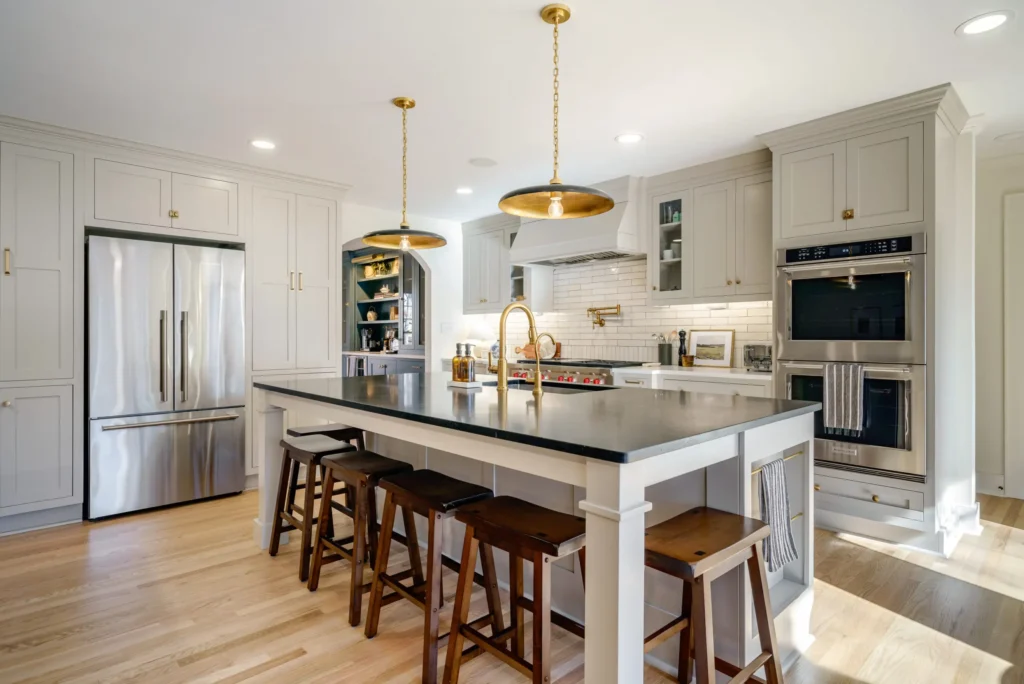
Renovated kitchens and baths
Finished basements
Updated roofs, HVAC, windows, or insulation
Ongoing care and maintenance
When those details are missing, the value is usually conservative.
That’s where AVM Optimizer and Home Value Optimizer come in.
These tools don’t replace the AVM — they build on it. You start with an existing automated value, then answer a small set of questions focused only on things AVMs can’t know. No double counting. No re-appraising the whole house.
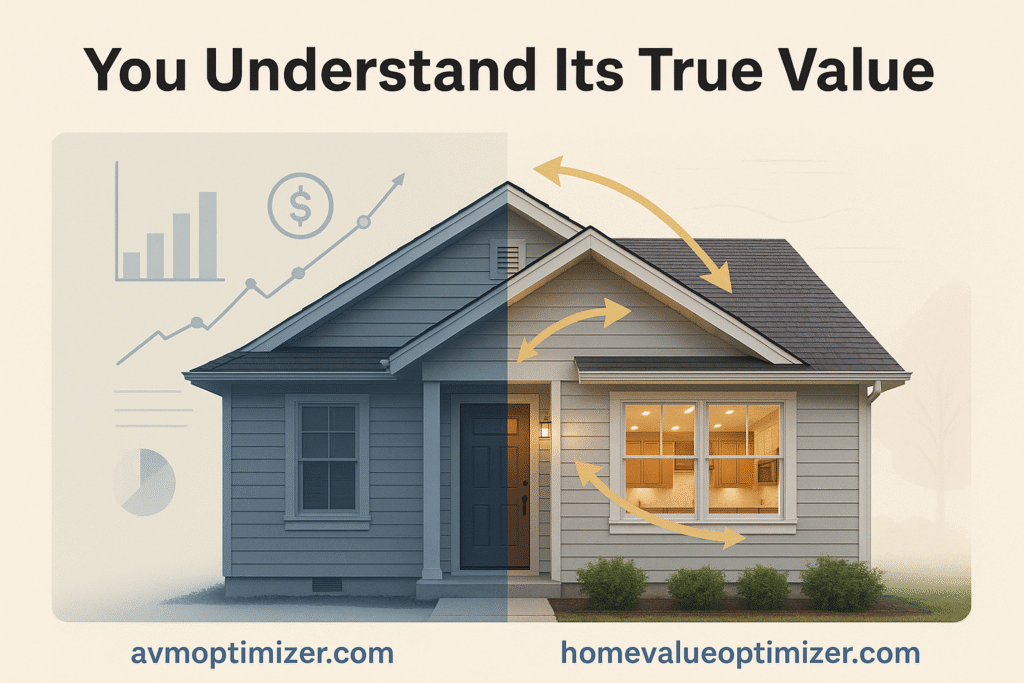
The result is a clearer, more realistic value range that reflects how the home actually lives — not just how it appears in public records.
Why this matters now:
Tight inventory and cautious buyers
Lenders leaning heavily on automation
Deals hinging on small value gaps
Being undervalued in this environment can cost real money.
Whether you’re preparing to sell, refinance, negotiate, or simply want clarity, optimizers let the homeowner add context — privately, on their terms.
AVMs estimate houses. Optimizers estimate homes — as lived in, improved, and understood by the people who know them best.
Before accepting any automated value as final, ask one question: What would the number be if the house could speak for itself?
That’s the problem AVM Optimizer and Home Value Optimizer were built to solve.
How AVM Optimizer and Home Value Optimizer Will Help Shape the Current Housing Market Story
One of the most important residential real estate stories of the past month has been the increase in existing-home sales driven by temporarily lower mortgage rates, even as housing supply remains stalled. Buyers have re-entered the market as rates eased, yet many homeowners continue to delay listing their properties during the winter months, constrained by uncertainty, seasonality, and the fear of mispricing.
According to the National Association of Realtors, existing-home sales rose modestly while inventory stayed tight—highlighting a market where demand is responding faster than supply. In this environment, valuation accuracy and confidence will play a critical role in determining whether momentum continues or stalls again.
This is where AVM Optimizer and Home Value Optimizer will help in several key areas.
Automated Valuation Models (AVMs) such as those used by major real estate websites are powerful tools—but they are not complete. They rely primarily on public records, recent sales, and market trends. What they cannot fully see or understand is the true condition of your home and the improvements that make it unique.
Used correctly, these tools can significantly improve the accuracy of an AVM—often increasing value—by incorporating critical information that standard AVMs simply don’t have access to.
Consumer-facing AVMs like Zillow, Redfin, Homes.com, and Realtor.com have become the default starting point for nearly every buyer and seller. But they are also quietly becoming the #1 deal-killer in residential real estate.
Why? Because buyers anchor to one number, sellers anchor to another, and agents end up negotiating between two inaccurate values—neither of which reflects the home’s true condition or improvements.
In today’s real estate market, understanding a home’s true value has never been more important. Buyers and sellers rely heavily on Automated Valuation Models (AVMs) from major real estate platforms like Zillow, Realtor.com, Redfin, and Homes.com. These tools offer a quick starting point—but they rarely tell the full story.
Every home has details an algorithm simply cannot see: the updates, the condition, the features, the maintenance, the improvements, and the challenges that only a human knows. This is where enhanced valuation tools—like AVM Optimizer and Home Value Optimizer—fill the gap.
Whether you’re buying, selling, refinancing, or simply tracking equity, the moment you truly understand your home’s adjusted value, your decisions instantly become clearer and more accurate.
🏡 The 5-Minute Equity Checkup: Are You Sitting on Hidden Home Value?
Most homeowners check their home value once — maybe on Zillow or Redfin — and move on. But what if that quick estimate is missing tens of thousands of dollars in hidden value tied to your home’s real condition, updates, or location appeal? Today’s online valuation tools (called AVMs, or Automated Valuation Models) are convenient — but they often miss what makes your home yours: the finished basement, the new roof, or the kitchen remodel that changed everything.
That’s where AVM Optimizer and Home Value Optimizer come in. They let you refine your AVM estimate in minutes, using simple dropdowns for updates, condition, and features that other models ignore.
Real Estate & Lending Pros — I’d love your feedback.
I’ve built two home valuation tools designed to improve accuracy by factoring in property condition and updates (things most AVMs can’t fully see):
• AVM Optimizer • Home Value Optimizer (a simpler, streamlined version)
Both help refine popular AVM estimates (Zillow, Redfin, Realtor, etc.) by adjusting for things like renovations, kitchen/bath updates, basement finish, roof/HVAC age, and more. In many cases, accuracy can improve up to 30% when these factors are entered correctly.
What I’m Asking From You
Take 2 minutes to try both tools and let me know:
✅ Which interface do you prefer? ✅ Which process feels clearer/easier for consumers? ✅ Which estimate results seem more accurate in your market?
AI builds, then interviews: A conversation with Steve Wiese, real estate appraiser and inventor behind HomeValueOptimizer.com.
Steve Wiese, a seasoned real estate appraiser with more than 35 years of experience and multiple patents in valuation and real estate technology, recently launched HomeValueOptimizer.com — an AI-enhanced evolution of his earlier project, AVMOptimizer.com. In this interview, Steve shares how he used ChatGPT to bring his idea to life, what he learned from the process, and how AI is reshaping the future of property valuation.
Q1. What inspired you to create Home Value Optimizer in the first place? Was there a specific problem with existing home value tools that pushed you to find a better solution?
A: I’ve always been interested in innovation within real estate. Over the years, I’ve applied for and been granted several patents in both the technology and real estate sectors — developing apps and business processes that improve valuation accuracy, environmental assessments, and even property depreciation analysis.
As a real estate appraiser, it was natural for me to focus on improving how real estate is valued. When Zillow introduced the Zestimate, it changed how people thought about home values — and the public became fascinated, even obsessed, with those numbers. But I also noticed a major flaw in that otherwise great idea: the blind spot around upgrades and condition. That gap between algorithmic estimates and actual property realities is what inspired me to build Home Value Optimizer.
In today’s housing market, accuracy matters more than ever. Whether you’re buying, selling, or simply curious about your home’s worth, the number you see online—your home value estimate—can shape big financial decisions. Yet most Automated Valuation Models (AVMs), such as those from Zillow, Redfin, or Realtor.com, rely primarily on public data and comparable sales. They often miss the personal details that truly define value: the finished basement, the remodeled kitchen, the new roof, or even the neighborhood’s character.
That’s where HomeValueOptimizer.com comes in—an experimental, streamlined, and improved version of the pioneering AVM Optimizer tool. Designed for clarity, speed, and precision, it empowers homeowners to refine the “big website” estimates and get closer to their home’s true market value.